
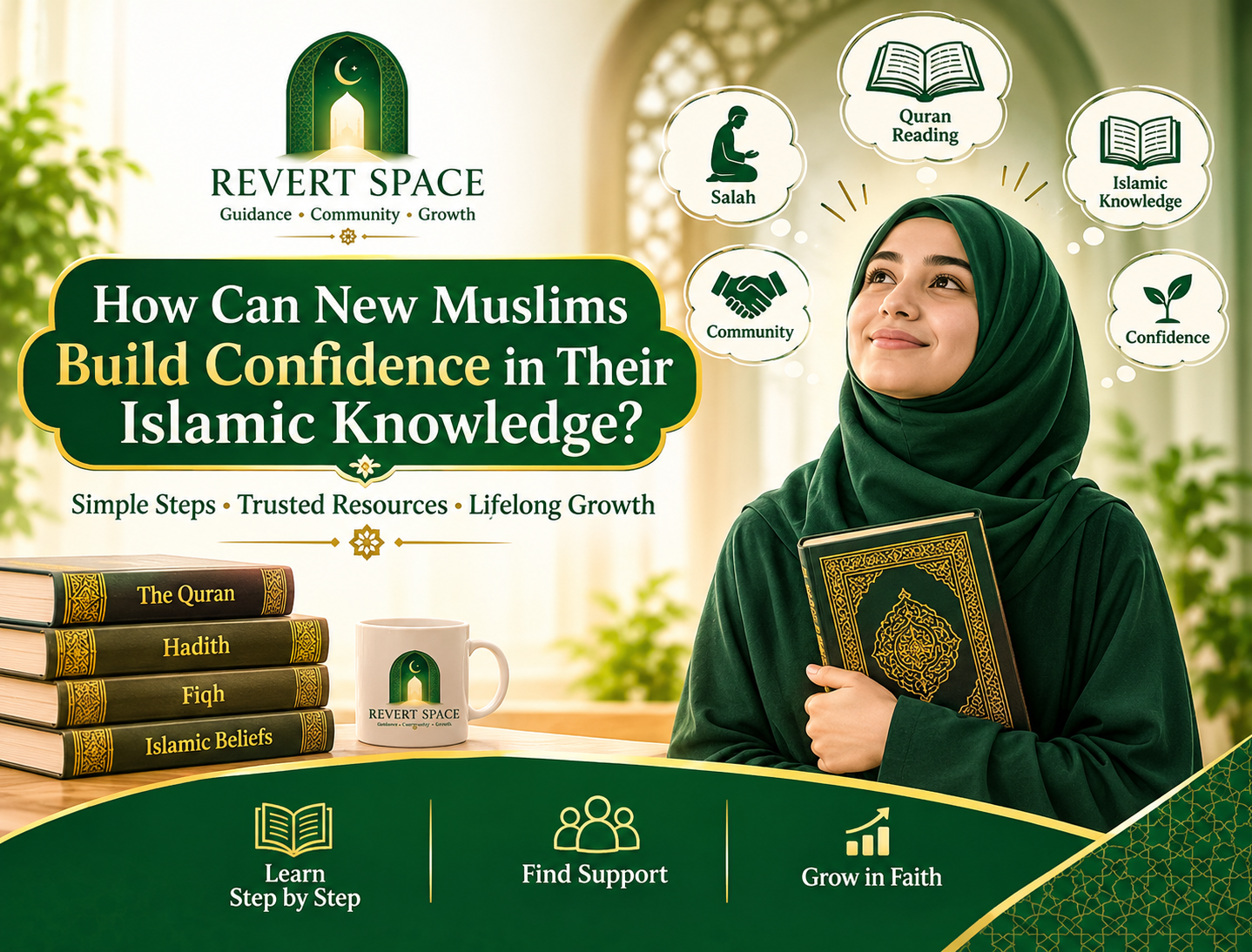

Many people finish their first month as a Muslim feeling excited and slightly lost at the same time. They know the basics of belief, yet a simple question from a relative or coworker can make their mind go blank. This article shares practical steps for building confidence in your faith as a new Muslim, based on how people actually learn and what experienced reverts say helped them most.
Why Confidence Feels Hard at the Beginning
Islam has a large body of knowledge, and many Muslims who grew up in the faith are still learning decades later. A new Muslim often sees that gap and assumes they are far behind, when in fact nobody expects you to know everything at once. The Prophet ﷺ taught that seeking knowledge is a duty on every Muslim, which describes a lifelong path and not an exam you must pass in your first year.
A few things usually make the early months feel heavier than they need to be:
- Comparing yourself with people who have studied for years
- Receiving conflicting advice from different websites and videos
- Worrying about making mistakes in prayer or pronunciation
- Feeling unsure how to answer questions from family and friends
- Learning alone, with nobody to check your understanding
Naming these pressures helps, because each one has a practical fix.
Start Small With Islamic Knowledge for Beginners
Trying to learn everything is the fastest route to feeling like you know nothing. A better plan is to choose a short list of core topics and stay with them until they feel familiar. Most teachers suggest this order: belief, prayer, the Quran, and character. If you want a structured version, this guide to Islamic knowledge for beginners lays out what to study first and what can wait.
A useful rule is one main topic per month. Spend four weeks on prayer, for example, before you move on to fasting or Quran study. Depth in a few areas builds more self-assurance than shallow contact with many.
Learning Islamic Beliefs in a Clear Order
Belief gives you a foundation to return to when questions arise. The faith rests on six articles of belief: Allah, the angels, the revealed books, the messengers, the Day of Judgment, and divine decree. Practice rests on five pillars: the shahada, prayer, charity, fasting in Ramadan, and pilgrimage for those able to go. A plain walkthrough oflearning Islamic beliefs through the five pillars is a good first read.
Try this simple method for each topic:
- Read a short explanation from a trusted source
- Write the main idea in one or two sentences of your own
- Explain it aloud as if to a friend
- Return to it a week later and see what you still remember
Research on learning has long shown that recalling information from memory and explaining it to someone else works better than rereading. Your notebook becomes proof of how far you have come.
Habits That Turn Knowledge Into Confidence
Knowing something and being able to do it are different feelings. Confidence usually grows when knowledge becomes routine, and these habits help:
- Practice the physical steps of worship until they feel natural. If wudu still feels clumsy, this walkthrough on how to learn wudu step by step is easy to follow along with.
- Keep a short daily slot, even ten minutes. Small regular effort beats occasional long sessions.
- Join a class that matches your level. Knowing what to expect from your first Islamic class removes much of the nervousness about attending.
- Keep a running list of questions and bring it to a teacher or mentor every week.
Progress is easier to see when you track it. Many people are surprised after three months by how much they can now do that once felt impossible.
Answering Questions From Family and Friends
Questions from loved ones can feel like tests, even when they come from curiosity or concern. You are not required to defend all of Islam in one conversation. Honest answers tend to land better than rehearsed ones, so these approaches help:
- Say “I am still learning” when you do not know. It is true and it earns respect.
- Share what Islam means to you personally before you explain rulings.
- Offer to look something up and return with an answer.
- Choose calm moments for deeper talks, not heated ones.
If this is your main worry, this guide on how toexplain your conversion to your family gives wording you can adapt.
Handling Shyness, Anxiety, and Mistakes
Some new Muslims feel nervous in a mosque or group even when everyone is welcoming. That reaction is common and it usually eases with repeated, low-pressure visits. This guide tofeeling shy at the mosque offers small steps, such as attending a short class first or arriving early when it is quiet.
Mistakes in recitation, prayer order, or Arabic words are part of learning. Teachers regularly correct beginners, and being corrected is a sign that someone is helping you improve. Sincere effort matters, and you can always ask a qualified person when you are unsure what to do.
Emotional health also affects how confident you feel. Stress, loneliness, and family pressure can make every question seem harder. Resources onmental health and spiritual wellness can help you look after your heart while you study.
Separating Islam From Culture
Many new Muslims meet different customs depending on which community they join, and it can be hard to tell what is religious teaching and what is local habit. Not knowing the difference can shake your confidence quickly. Reading aboutIslam or culture will help you ask better questions and avoid assuming that every practice you see is required.
When you meet an unfamiliar rule or custom, ask your teacher for the source and the reason behind it. Understanding the why turns confusing advice into knowledge you can rely on.
Build a Circle That Supports You
Few people grow in confidence alone. Learning with others lets you hear different questions, share worries, and see that your experiences are normal. Look for these kinds of support:
- A mentor who can answer questions privately
- A regular class with a fixed teacher
- One or two friends at a similar stage
- A safe and non-judgmental space where you can ask basic questions without embarrassment
If loneliness is part of the picture, reading aboutdealing with loneliness after converting may help you feel less isolated. Realnew Muslim confidence grows when you realize others have walked the same road.
A Simple Four-Week Plan
- Week one: choose one topic, such as prayer, and one trusted source. Write down three questions.
- Week two: practice daily, explain the topic aloud once, and ask your questions to a teacher or mentor.
- Week three: review your notes, correct what you got wrong, and share one thing you learned with a friend.
- Week four: reflect on what changed, then pick the next topic.
Repeating this cycle through your first year gives you a steady rhythm without pressure.
Frequently Asked Questions (FAQs)
1. How long does it take to build confidence as a new Muslim?
There is no fixed timeline, but most people notice real change after two to three months of steady daily practice. Knowingwhat to expect as a new Muslim can make the early weeks feel less overwhelming.
2. Where should I start with Islamic knowledge for beginners?
Begin with prayer, core beliefs, and a short daily Quran habit, then add other topics one at a time. This list of thefirst 20 things every new Muslim should learn gives a clear starting order.
3. How can I stay consistent with my studies?
Set a small daily goal, such as ten minutes, and track it in a notebook. Thesepractical tips for a new Muslim show how to build routines that last.
4. Is it better to join a class or study alone?
A class gives you correction and answers, while self-study gives you flexibility, so many beginners combine both. Look forIslamic classes with personal guidance if you want someone to check your progress.
5. How do I build a strong base for learning Islamic beliefs?
Study the pillars and articles of faith slowly, and explain each one in your own words. This guide on how tobuild your Islamic foundation after becoming Muslim offers a simple structure.
6. How can I find supportive Muslim friends?
Start with a class, a local mosque, or an online group where beginner questions are welcome. Here is how tofind Muslim friends without feeling pressured.
7. What should I do if my family reacts badly to my conversion?
Stay calm, listen first, and give people time to adjust. Reading aboutfamily reactions after becoming Muslim can help you plan respectful conversations.
8. Can I start by reading the Quran in translation?
Yes, reading a trusted translation helps you understand the message while you work on Arabic separately. This overview of how toread the Quran for beginners explains how to pace yourself.
Conclusion
Confidence comes from small, repeated steps, honest questions, and people who support you, so you can stop waiting to feel like an expert before you act. At Revert Space, free courses, 1-to-1 mentorship, and a caring community are designed to help new Muslims learn at their own pace and grow in assurance over time. Register on the site, pick one beginner course, and take your next step today.
